


Infantry Attack: War 3D FPS
4.66.56K Reviews
App Specs
- Version
- 1.36.6
- Updated On
- License
- Free
- Downloads
- 10,000,000+
- Developer
- VOODOO
- Categories
- Action
- Platform
- Android
Screenshots
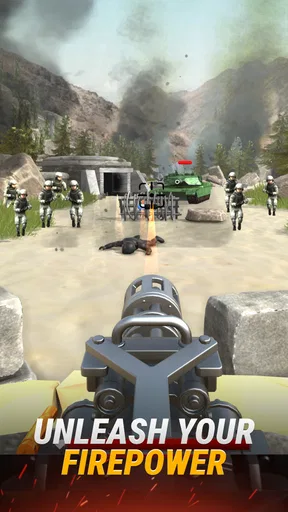
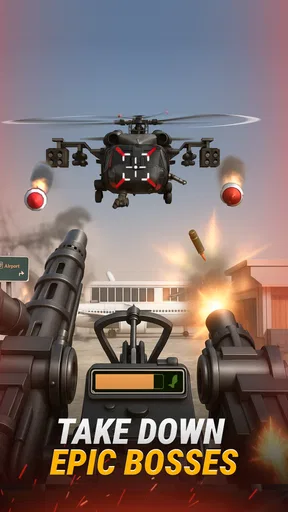
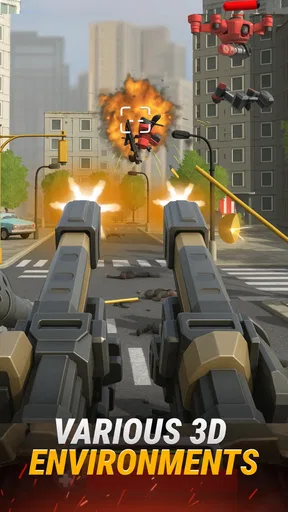
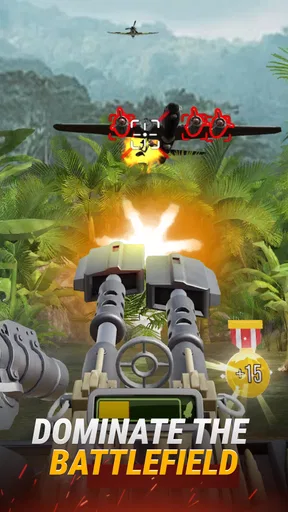
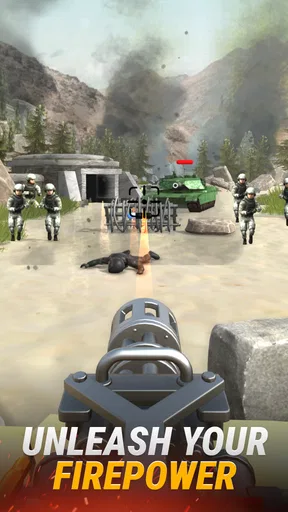
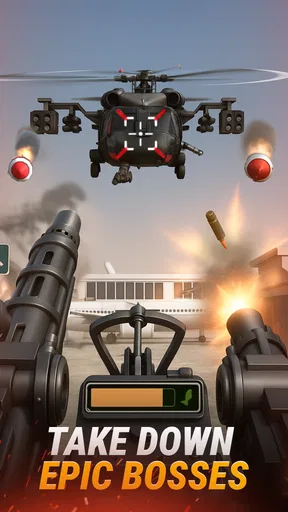
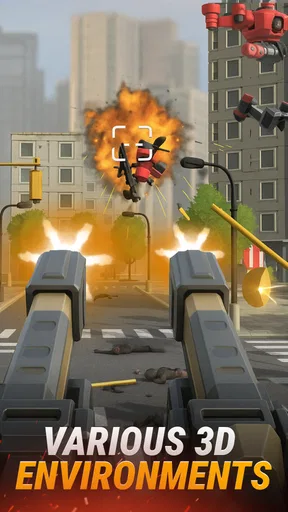
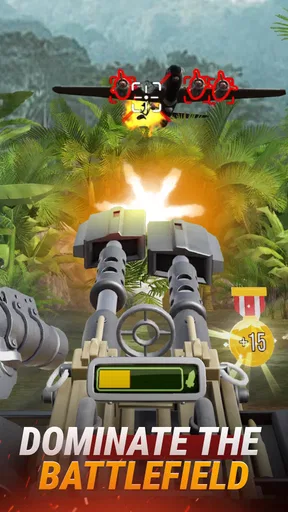
 Analysis by AppCompare
Infantry Attack: War 3D FPS is the kind of action game I can understand immediately: I enter a battlefield, aim at opposing soldiers, and try to push through the fight before the pressure becomes too much. Its appeal is direct rather than complicated, which makes it easy to pick up when I have a few spare minutes. Developed by VOODOO, it is free to download, carries a Teen content rating, and has built a sizeable audience with a 4.6 average from around 112 thousand ratings.
After spending time with it, my view is mixed in a useful way. The first sessions are lively because the game gives me an uncomplicated objective and keeps the action moving. The harder question is whether that simplicity remains satisfying after the novelty of the battlefield wears off. For me, the answer depends heavily on what I want from a mobile shooter. If I want quick, low-friction action, it has a clear place. If I want deep weapon tuning, a strong competitive scene, or a campaign I can become attached to, this is not the game I would keep at the center of my gaming routine.
Why the first sessions work so well
The strongest part of the experience is the short path between opening the game and getting into combat. I do not need to learn a complicated control scheme before understanding what matters. The battlefield gives me an immediate problem: identify threats, keep moving, and attack before the opposing force overwhelms the position. That clarity is valuable on a phone, especially when I am playing during a short break rather than settling in for a long session.
The first-week appeal comes from the rhythm of action. Each encounter encourages me to react instead of overthinking. I can concentrate on where danger is coming from, adjust my aim, and decide whether pushing forward is safer than waiting. That makes the game approachable for people who enjoy casual mobile shooting but do not want the preparation or lengthy tutorials often associated with larger first-person shooters.
I also like that the game’s basic fantasy is easy to read. It is not asking me to manage a complicated military operation or follow a dense story before I can enjoy the shooting. The focus stays on the battlefield itself. That narrow purpose helps the game feel accessible, although it also creates the main question I kept returning to: once I understand the central loop, what will keep me coming back?
For a realistic everyday use case, I can see myself playing it while waiting for an appointment or taking a short break between tasks. It suits moments when I want something more active than a puzzle but do not have the time or attention for a long match. I would not start it while commuting if I needed to preserve concentration, but during a quiet pause it can provide a quick burst of engagement without demanding a large time commitment.
The controls are most comfortable when I treat the game as a reaction exercise rather than a precision simulation. I focus on keeping my view stable, tracking the most immediate target, and avoiding unnecessary movements. A useful habit is to resist firing the moment an enemy appears. Taking a brief moment to line up the attack can make the difference between progressing smoothly and wasting the opportunity while the battlefield becomes crowded.
Worth Reading Before You Choose

EA SPORTS FC Mobile 26 Is a Bigger Football Game, but It Takes Time

Flipboard Shows What News Apps Must Do Beyond the Feed

Switching to Android Auto Means Rethinking Your Driving Routine

Google Calendar Makes a Crowded Week Easier to Manage

Ludo King Makes the Most of the Minutes Between Plans

Baby Panda World Brings Quick Play to Modern Phones, but Its Game Library Feels Busy
Another practical tip is to watch the space around the target instead of staring only at the nearest soldier. In a game built around battlefield pressure, the immediate threat is not always the only threat that matters. I found it more useful to keep checking the wider scene, especially after an attack, because tunnel vision can leave me reacting too late to what is happening beside or behind the main target.
This is also where the game differs from more demanding alternatives. A large competitive shooter usually rewards map knowledge, team coordination, carefully chosen loadouts, and long-term mechanical practice. Infantry Attack: War 3D FPS feels more self-contained. I can enjoy it without arranging a group of friends or learning a large collection of systems. That is a strength for convenience, but it means the game does not offer the same sense of personal improvement that I get from a deeper multiplayer shooter.
What makes the opening hours accessible
The free entry point matters here. I can try the game without making a purchase decision first, which makes it easier to judge whether its compact action suits me. The current version is 1.36.6, and the game supports Android 8.0 or later. Those details are useful before installing: the experience is aimed at a broad mobile audience, but anyone using an older Android device should check compatibility before planning around it.
The Teen rating is another reason I would not treat it as a children’s game simply because the controls are easy to learn. The setting is military combat, and the action is built around attacking enemy soldiers. Parents choosing a game for a younger player should consider that tone rather than assuming that a simple interface means universally suitable content.
During the first week, the main reward is familiarity. I learn how quickly situations develop, when to prioritize a visible opponent, and how much movement I can manage without losing control. Those small improvements feel meaningful at first because every session teaches me something about the pace. The challenge is that this learning curve is front-loaded. Once I have absorbed the basic rhythm, the game has to rely on variety and progression to maintain interest.
What remains when the novelty fades
Month-to-month value is where I become more cautious. A game can be enjoyable in short bursts and still fail to earn a permanent place on my phone. In this case, the lasting appeal comes from the convenience of returning to familiar action, not from a deep personal investment in a world or a long-form narrative. I can see myself reopening it when I want a quick battlefield session, but I would not automatically make it part of a daily routine.
The distinction is important. Some players want a reliable five-minute distraction, and this game can serve that purpose well. Others want every session to reveal a new strategy, a new story beat, or a new layer of customization. For those players, the straightforward design may begin to feel narrow. The game’s identity is built around immediate combat, so it should not be judged as if it were trying to be a full-scale military simulator.
Its audience size suggests that the concept has broad reach: it has passed ten million installs and collected around 6.6 thousand written reviews. I read that as evidence that the basic formula is easy for many people to understand, not as proof that it will remain compelling for every player. Popularity can tell me that the entry barrier is low, but it cannot remove the personal question of whether repeated sessions feel fresh.
For continued use, I would approach it as a rotation game. I might keep it installed alongside a slower strategy title, a story-driven game, or a more competitive shooter. That way, its quick action becomes a useful change of pace rather than a responsibility. When I play it after a demanding game, its simplicity feels refreshing. When I play it repeatedly in the same sitting, I become more aware of the limited scope.
A good personal rule is to stop while the action still feels satisfying. Because the game is easy to start, it is tempting to continue automatically after a successful encounter. I found that taking a break before the loop becomes repetitive protects the fun. This is not a criticism of the controls; it is a recognition that short-session games often work best when I let them remain short.
Players also need to think about spending. The game is free, but its in-app purchases range from $0.99 to $47.99 per item. That wide range makes it sensible to decide in advance whether I am comfortable with optional purchases. I would not spend simply because a difficult moment makes me impatient. If I were going to buy anything, I would first ask whether it changes my enjoyment over several sessions or merely removes a temporary obstacle.
This is one of the more important long-term trade-offs. Free access makes experimentation easy, but optional purchases can change how I evaluate progress. If I feel that I must spend to keep the action comfortable, the game stops feeling like a relaxed break and starts feeling like a system I need to manage. My recommendation is to play without spending initially and judge the ordinary loop on its own terms.
Who gets real recurring value from it
I think the best match is someone who wants accessible battlefield action in small portions. That includes a player who enjoys aiming and advancing but does not want a complicated online commitment. It may also suit someone returning to mobile games after a long break, because the core idea is easy to grasp and the action does not require a large amount of background knowledge.
I would be less enthusiastic for a player whose main goal is a serious competitive challenge. In that situation, a more established multiplayer shooter with deeper team play would probably be a better choice. I would also point story-focused players toward a narrative game, since the appeal here is the moment-to-moment fight rather than character development or emotional storytelling.
It is not ideal for someone who dislikes repeated combat loops. Even if the first sessions are exciting, the central activity remains consistent. Players who need constant changes in objectives may experience fatigue sooner than players who enjoy refining their reactions within a familiar format.
The maintenance burden and everyday friction
One advantage of a focused game is that it is easy to remember how to play after a break. I do not need to relearn a complex economy or reconstruct a large story every time I return. That lowers the maintenance burden from a player’s point of view. I can leave it alone for a while and come back without feeling that I have fallen hopelessly behind in knowledge.
At the same time, the game’s simplicity means that my own discipline becomes part of the maintenance. I need to manage how often I play, how I respond to difficult encounters, and whether purchases are influencing my decisions. The practical burden is not learning dozens of systems; it is recognizing when the short-session loop is no longer giving me enough value.
Device compatibility should be considered before installation. Android 8.0 is the minimum operating system, so users on older phones may need to look elsewhere. I would also make sure I have enough free storage and a stable setup before starting, particularly if I plan to play regularly. I am mentioning this as ordinary preparation rather than a flaw in the game: mobile action is more enjoyable when interruptions, low battery, or a crowded device do not become part of every session.
The Teen rating also affects where I would play it. The combat theme makes it less suitable for a shared family device used by younger children. If I were recommending it to a friend with children, I would point out the age guidance before discussing the gameplay. That is a small but important part of deciding whether the game fits a household.
Another maintenance question is whether the game can remain interesting without turning into a spending habit. Since the purchase range reaches $47.99 per item, I would use device-level purchase protections if other people can access the phone. I would also avoid treating a purchase as a solution to every difficult section. The better test is whether I still enjoy the basic combat when I remove the possibility of buying my way past frustration.
For me, the cleanest workflow is simple: play a short session, notice which part was enjoyable, and close the game before I begin repeating actions mechanically. If I return later and still look forward to aiming, moving, and surviving the battlefield, it has earned another place in my rotation. If I open it only out of habit, that is a sign to take a longer break.
Where fatigue begins to set in
The main source of fatigue is repetition. The direct combat that makes the game welcoming can also limit its staying power. Once I understand the expected rhythm, the excitement depends more on how much variation I perceive in each encounter. If that variation does not feel meaningful to me, the game can become something I play automatically rather than something I actively choose.
There is also a ceiling to the satisfaction of uncomplicated action. In a deeper shooter, a defeat might encourage me to change my route, coordinate with teammates, adjust equipment, or study a map. Here, my response is more likely to be immediate and tactical: aim better, react faster, and try again. That can be satisfying for a while, but it offers fewer ways to solve a problem when I want a strategic alternative.
The game may therefore divide players into two groups. One group will appreciate the absence of clutter and enjoy the clean focus on attacking enemies. The other will interpret that same focus as a lack of depth. Neither response is unreasonable. My own experience sits between them: I value the game as a compact action break, but I would not use it as my only shooter.
Another possible frustration is the relationship between free access and in-app purchases. Even without assuming that spending is necessary, the presence of purchases can affect how I perceive progression and difficulty. A game feels more relaxing when I can accept a setback as part of play. If I start viewing every setback as a reason to consider buying something, the atmosphere changes. That is why I recommend setting a personal spending boundary before the first purchase appears tempting.
There is a subtle trade-off between accessibility and mastery as well. The game is approachable because it does not overwhelm me with systems, but that also means there may be fewer advanced techniques to study. A newcomer can feel effective quickly, which is a strong first impression. An experienced shooter player may reach the limits of that satisfaction sooner, especially if they are accustomed to games where small tactical decisions create very different outcomes.
For a friend deciding whether to install it, I would phrase the test this way: do you want a fast combat toy or a long-term competitive hobby? If the first description sounds right, the game is worth trying. If the second is closer to your expectations, I would choose a more feature-rich alternative and keep this one only as an occasional change of pace.
My long-term verdict
Infantry Attack: War 3D FPS earns its place through convenience, not depth. It gives me an easy route into mobile combat, works well for short breaks, and avoids the preparation that can make larger shooters feel demanding. The free price makes trying it straightforward, while the Teen rating and Android 8.0 requirement give me practical information to consider before installing.
Its long-term value is more conditional. I can imagine keeping it on my phone if I enjoy returning to a familiar battlefield loop and if I am comfortable ignoring the pressure to spend. I would not expect it to replace a competitive shooter, a tactical strategy game, or a story-led campaign. Those alternatives offer stronger reasons to develop skills, follow a world, or coordinate with other players.
My recommendation is to treat it as a compact action game, not as a complete shooter lifestyle. Try it during the first week, pay attention to whether the combat remains enjoyable after the initial surprise, and decide based on that ordinary loop rather than on the excitement of the first few sessions. If you still enjoy the quick decisions after the novelty fades, it can be a dependable part of a mobile-game rotation.
For me, that is the honest conclusion. The game succeeds when I want immediate battlefield action with very little setup. It becomes less convincing when I ask it to provide endless variety, serious competitive depth, or a strong reason to return every day. VOODOO has made an accessible free action title, and its large install base reflects that broad appeal. I would recommend giving it a fair trial, but I would keep expectations focused: its lasting strength is convenience and quick engagement, while its main weakness is that the same simplicity can eventually make each return feel familiar rather than fresh.
Pros
- Fast-paced FPS combat with simple controls for quick matches.
- 3D battlefields provide a more immersive war-game atmosphere.
- Multiple weapons add variety to firefights and play styles.
- Short missions are convenient for playing during brief breaks.
- Offline play may be useful when a stable internet connection is unavailable.
Cons
- Enemy behavior can feel predictable after repeated missions.
- Frequent combat may become repetitive without more varied objectives.
- Touch controls can be difficult to use during intense firefights.
- Graphics may look dated on newer phones and tablets.
- Progression may encourage grinding or in-app purchases.
FAQs for Infantry Attack: War 3D FPS
What is Infantry Attack: War 3D FPS?
Infantry Attack: War 3D FPS is a mobile first-person shooter focused on infantry combat, objective-based missions, and fast battlefield action. You control a soldier from a first-person perspective, move through war-themed environments, and use firearms to defeat enemy forces. The game is designed for short, accessible sessions, making it suitable for players who want a straightforward military shooter on Android or iOS.
How does the gameplay work, and is it suitable for beginners?
The gameplay generally combines movement, aiming, shooting, and mission objectives in compact combat scenarios. Controls are designed for touchscreens, with on-screen buttons or gestures used to navigate and engage enemies. Beginners should be able to understand the basic mechanics quickly, although later missions may require better positioning, faster reactions, and careful weapon use rather than simply advancing and firing continuously.
Does Infantry Attack: War 3D FPS require an internet connection?
Whether a permanent internet connection is required can depend on the version, mode, and device. Some missions may be playable offline after the game has finished downloading its necessary files, while advertisements, updates, cloud features, or online content may require connectivity. It is best to check the current store description and test the game before traveling or relying on it without mobile data.
Is Infantry Attack: War 3D FPS free to download, and are there advertisements or in-app purchases?
The game may be available as a free download, but free-to-play titles commonly support themselves through advertising and optional in-app purchases. Players may encounter ads between missions or after completing certain actions, while purchases can sometimes provide currency, upgrades, weapons, or other conveniences. Review the store listing and payment settings before downloading, especially if children may use the device.
What devices are needed to play Infantry Attack: War 3D FPS smoothly?
Because Infantry Attack: War 3D FPS uses three-dimensional environments, animated enemies, and real-time shooting effects, performance can vary between phones and tablets. A relatively recent device with sufficient free storage and an updated operating system should provide a better experience. Older or entry-level hardware may show longer loading times, reduced frame rates, or occasional heating, so check the app’s current compatibility requirements first.


